 aamirsohailburki1@gmail.com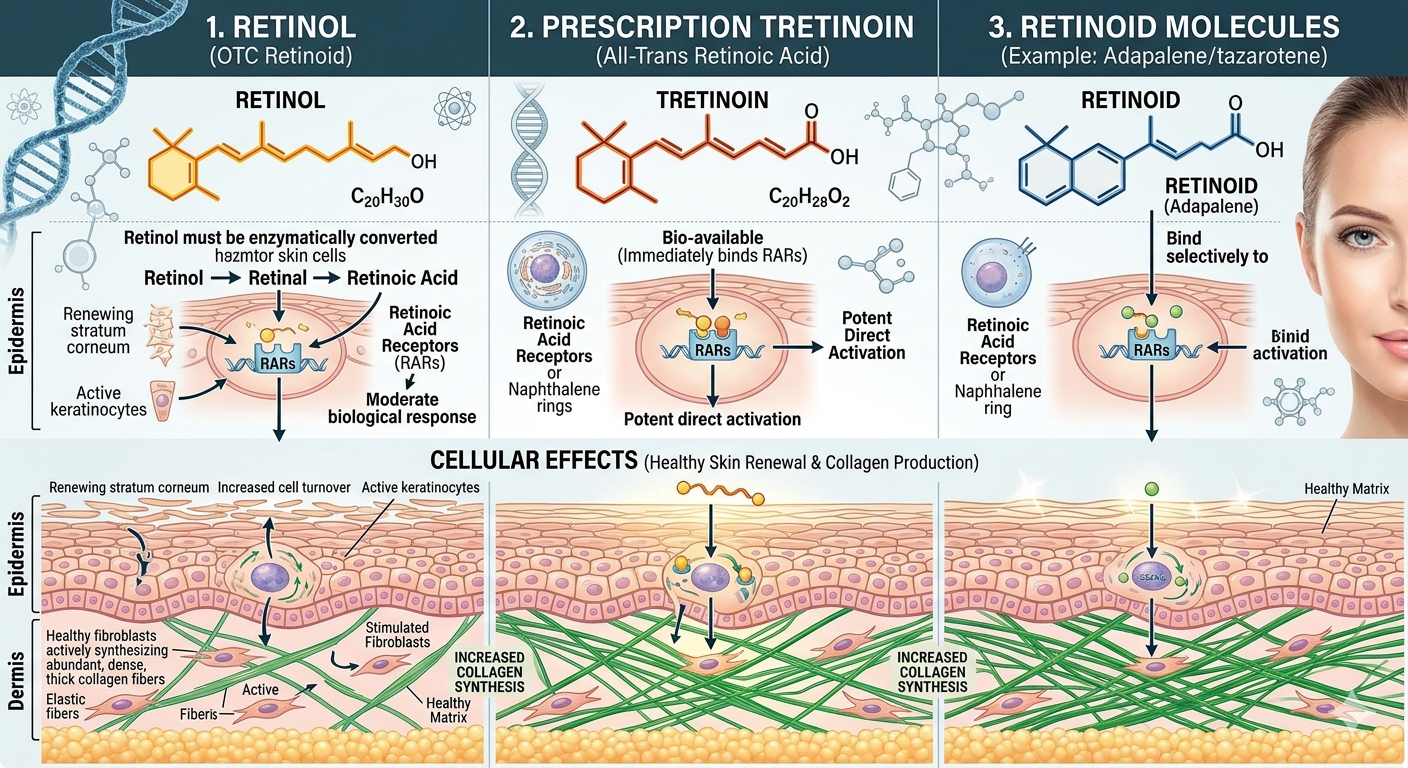
Introduction
If dermatologists had to choose a single ingredient category with the strongest evidence for improving skin aging, acne, and skin texture, many would choose retinoids without hesitation.
Yet despite their popularity, confusion surrounding retinol, retinoids, and tretinoin remains widespread. Are they the same thing? Is prescription tretinoin really better than over-the-counter retinol? And why do some people experience dramatic improvements while others struggle with irritation and peeling?
The answers lie in chemistry and biology.
All three belong to the vitamin A family, but they differ significantly in strength, effectiveness, speed of results, and side-effect profiles. Marketing often blurs these distinctions, making it difficult for consumers to understand what they’re actually buying.
The scientific literature on retinoids spans more than four decades, making them among the most extensively researched skincare ingredients ever studied. Unlike many trendy skincare actives, their benefits are supported by numerous clinical trials and dermatological guidelines.
In this article, we’ll break down the science behind retinol, retinoids, and tretinoin, compare their effectiveness, review key clinical studies, and help you determine which option may be most appropriate for your skin goals.
Understanding the Science: How Retinoids Work
Retinoids are a family of compounds derived from vitamin A. Their primary function is to influence how skin cells grow, mature, and communicate.
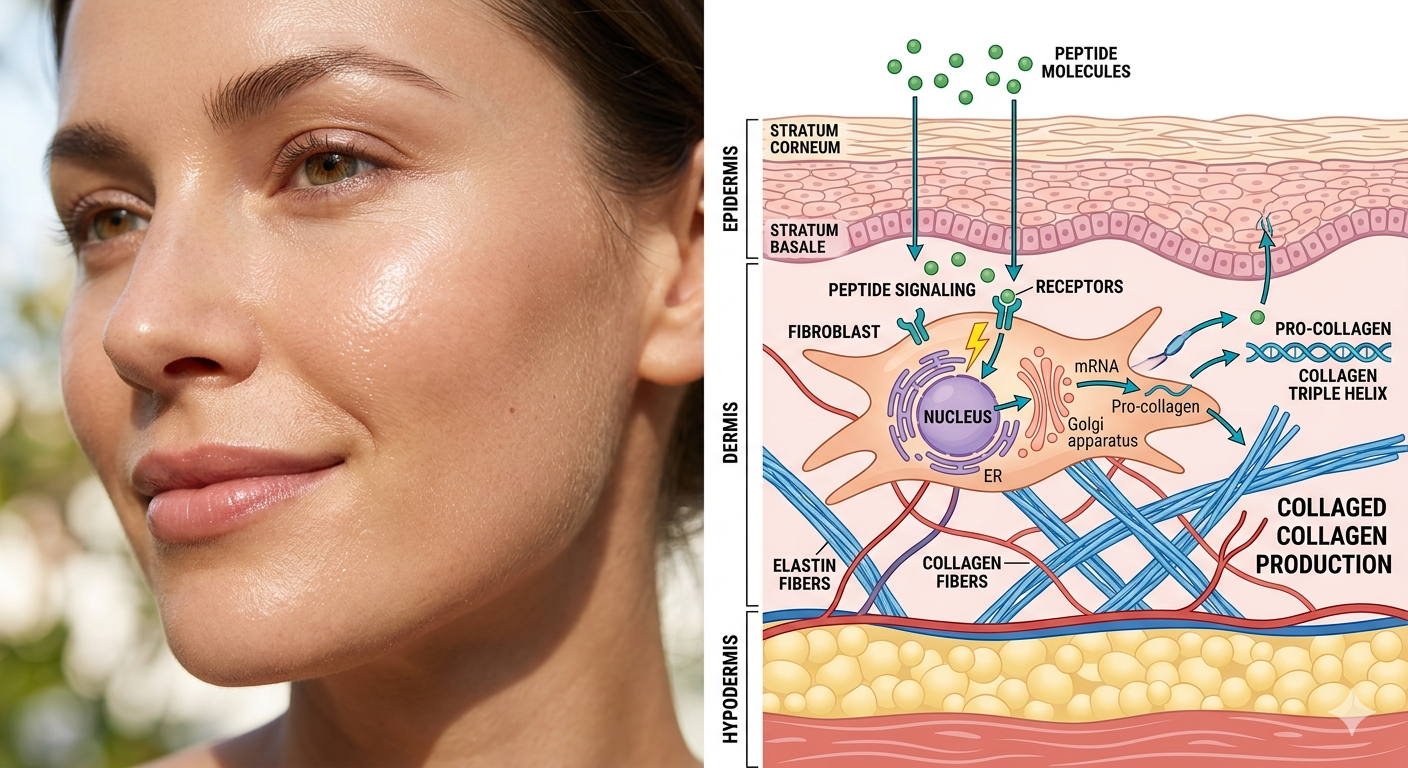
At the biological level, retinoids bind to specialized receptors within skin cells known as retinoic acid receptors (RARs). Once activated, these receptors regulate genes involved in cell turnover, collagen production, pigmentation, and inflammation.
In simpler terms, retinoids help skin behave more like younger skin.
As we age, skin cell turnover slows. Dead cells accumulate on the surface, collagen production decreases, and pigmentation irregularities become more noticeable. Retinoids accelerate cellular renewal and stimulate fibroblasts to produce new collagen.
The key difference between retinol and tretinoin is conversion.
Tretinoin is already in its active form: retinoic acid. Once applied, it can immediately interact with skin receptors.
Retinol, on the other hand, must undergo multiple conversion steps:
Retinol → Retinaldehyde → Retinoic Acid
Each conversion reduces potency, which explains why retinol is generally less effective but also less irritating.
A landmark study that helped establish tretinoin’s anti-aging benefits is:
Study Citation
Title: “Topical Tretinoin Improves Photoaged Skin”
Authors and Year: Weiss JS et al., 1988
Journal: Journal of the American Medical Association (JAMA)
Link: https://pubmed.ncbi.nlm.nih.gov/2967500/
Finding: Tretinoin significantly improved fine wrinkles, skin texture, and photodamage in treated patients.
This study helped transform tretinoin from an acne treatment into one of the most respected anti-aging therapies in dermatology.
Today, the retinoid family includes:
- Retinol (OTC)
- Retinaldehyde (OTC)
- Adapalene (OTC in some countries)
- Tretinoin (Prescription)
- Tazarotene (Prescription)
- Trifarotene (Prescription)
Although all belong to the same family, they vary dramatically in potency.
Deep Dive into the Benefits
Improved Wrinkles and Fine Lines
One of the most celebrated benefits of retinoids is wrinkle reduction.
The claim is simple: retinoids stimulate collagen production and reduce visible signs of aging.
Scientific research strongly supports this claim.
Study Citation
Title: “Topical Retinoic Acid Improves Photoaged Skin”
Authors and Year: Kligman et al., 1986
Journal: Journal of the American Academy of Dermatology
Link: https://pubmed.ncbi.nlm.nih.gov/2943769/
Finding: Retinoic acid significantly improved wrinkles and skin roughness in photoaged skin.
Tretinoin remains the gold standard because it directly activates retinoid receptors without requiring conversion.
Retinol also improves wrinkles, though generally more slowly.
Study Citation
Title: “Topical Retinol Improves Fine Wrinkles Associated with Natural Aging”
Authors and Year: Kang et al., 2007
Journal: Archives of Dermatology
Link: https://pubmed.ncbi.nlm.nih.gov/17938329/
Finding: Retinol increased collagen production and reduced fine wrinkles over 24 weeks.
Expected timelines:
- Tretinoin: 8–16 weeks
- Retinaldehyde: 8–12 weeks
- Retinol: 12–24 weeks
Acne Treatment
Retinoids were originally developed for acne management.
They work by preventing clogged pores, reducing inflammation, and normalizing skin cell shedding.
Research consistently shows prescription retinoids outperform most non-prescription options for moderate acne.
Study Citation
Title: “Guidelines of Care for Acne Vulgaris Management”
Authors and Year: Zaenglein et al., 2016
Journal: Journal of the American Academy of Dermatology
Link: https://pubmed.ncbi.nlm.nih.gov/26897386/
Finding: Topical retinoids were recommended as first-line acne treatments.
Adapalene and tretinoin are particularly effective because they target microcomedones before visible breakouts form.
Expected timeline:
- Initial improvement: 6–8 weeks
- Significant improvement: 12 weeks or longer
Hyperpigmentation and Uneven Skin Tone
Many people focus on wrinkles, but retinoids also improve discoloration.
By accelerating cell turnover, retinoids help fade post-inflammatory marks, sun damage, and uneven pigmentation.
Study Citation
Title: “Retinoids in the Treatment of Skin Aging”
Authors and Year: Mukherjee et al., 2006
Journal: Clinical Interventions in Aging
Link: https://www.ncbi.nlm.nih.gov/pmc/articles/PMC2699641/
Finding: Retinoids improved pigmentation abnormalities and overall skin appearance.
Results typically appear after:
- 8–12 weeks for mild discoloration
- 3–6 months for stubborn pigmentation
Enhanced Skin Texture and Thickness
A lesser-known benefit is skin remodeling.
Aging skin becomes thinner due to declining collagen and elastin production.
Retinoids stimulate dermal remodeling and increase epidermal thickness.
Study Citation
Title: “Molecular Basis of Retinoid Actions in Skin”
Authors and Year: Fisher and Voorhees, 1998
Journal: FASEB Journal
Link: https://pubmed.ncbi.nlm.nih.gov/9657742/
Finding: Retinoids enhanced collagen synthesis and inhibited collagen breakdown.
Most users notice smoother texture within two to three months.
How to Use Retinol, Retinoids, and Tretinoin Correctly
Success with retinoids depends heavily on application technique.
The most common mistake people make is using too much too soon.
Begin by cleansing with a gentle, non-stripping cleanser. Wait until the skin is completely dry because damp skin can increase irritation.
Apply a pea-sized amount for the entire face.
Retinol products typically contain concentrations ranging from 0.1% to 1%.
Prescription tretinoin commonly comes in:
- 0.025%
- 0.05%
- 0.1%
Contrary to popular belief, stronger is not always better. Many dermatologists prefer starting with lower strengths to improve long-term adherence.
Frequency recommendations:
- Beginners: 2–3 nights weekly
- Intermediate users: Every other night
- Experienced users: Nightly
Retinoids pair well with:
- Niacinamide
- Ceramides
- Hyaluronic acid
- Peptides
Potentially irritating combinations include:
- Strong exfoliating acids
- Benzoyl peroxide (unless specifically directed)
- Aggressive physical scrubs
Common side effects include:
- Dryness
- Peeling
- Redness
- Burning sensation
These symptoms often occur during the “retinization” period and may improve after several weeks.
Who should avoid retinoids?
Individuals who are pregnant or trying to conceive should consult healthcare professionals before using retinoid products due to safety concerns associated with vitamin A derivatives.
People with severe eczema, rosacea flare-ups, or compromised skin barriers should also seek dermatological guidance.
Common Myths vs Facts
Myth 1: Retinol and Tretinoin Are the Same
False.
Retinol requires conversion into retinoic acid. Tretinoin already exists in its active form and is significantly more potent.
Myth 2: Stronger Always Means Better
Not necessarily.
A weaker retinoid used consistently often outperforms a stronger product that causes irritation and discontinuation.
Research consistently highlights adherence as a major predictor of success.
Myth 3: Retinoids Thin the Skin
This is one of the oldest misconceptions.
Although temporary peeling occurs, retinoids actually increase epidermal thickness and stimulate collagen production.
Myth 4: You Can’t Use Retinoids Long-Term
Research suggests the opposite.
Many clinical studies have followed patients for years and demonstrated ongoing benefits with continued use.
Comparison Table
| Type | Effectiveness | Cost | Best For | Caution |
|---|---|---|---|---|
| Retinol | Moderate | Low to Moderate | Beginners, mild aging | Slower results |
| Retinaldehyde | Moderate to High | Moderate | Faster OTC results | May cause irritation |
| Adapalene | High for acne | Moderate | Acne-prone skin | Less anti-aging data |
| Tretinoin | Very High | Moderate | Wrinkles, acne, pigmentation | Higher irritation risk |
| Tazarotene | Extremely High | Moderate to High | Severe aging and acne | Most irritating |
| Trifarotene | High | Moderate | Acne treatment | Newer research base |
Relative Effectiveness Comparison
Expert Insights and Clinical Study Review
Among dermatologists, tretinoin remains the benchmark against which nearly all anti-aging ingredients are measured.
The reason is straightforward: no over-the-counter skincare ingredient has accumulated comparable long-term evidence for improving wrinkles, pigmentation, and collagen production.
However, dermatologists increasingly recognize that retinol and retinaldehyde may offer better real-world outcomes for many individuals because they are easier to tolerate.
One interesting trend in current research involves combining retinoids with barrier-supporting ingredients such as ceramides, peptides, and niacinamide. These formulations aim to preserve effectiveness while reducing irritation.
Another area of investigation involves encapsulated retinoids, which may improve delivery and stability while minimizing side effects.
My recommendation is often surprisingly conservative: if you’re completely new to vitamin A products, a high-quality retinol or retinaldehyde product may be the smartest starting point. Jumping immediately to high-strength tretinoin often leads to irritation, frustration, and abandonment.
Despite the hype surrounding newer anti-aging ingredients, retinoids remain the standard by which most anti-aging treatments are judged.
Medical Disclaimer
Medical Disclaimer: This article is for educational purposes only. It is not medical advice. Always consult a dermatologist or healthcare professional before starting new skincare treatments, especially if you have sensitive skin, active skin conditions, or are pregnant/nursing.
Conclusion
When comparing retinol, retinoids, and tretinoin, the science is remarkably clear.
Tretinoin is generally the most effective option for wrinkles, acne, pigmentation, and long-term skin remodeling because it is already in its active form. However, it also carries the highest risk of irritation.
Retinol offers a gentler entry point, making it ideal for beginners and those with sensitive skin. While results take longer, consistent use can still produce meaningful improvements.
Retinaldehyde sits in the middle, offering stronger results than retinol with less irritation than tretinoin, making it one of the most underrated options in skincare.
Ultimately, the “best” choice depends on your skin goals, tolerance level, and willingness to use the product consistently. The most effective retinoid is the one you can use regularly without damaging your skin barrier.
If you’re uncertain which option is right for you, consult a dermatologist who can recommend a personalized approach based on your skin type, concerns, and medical history.
Relative retinoid potency
Approximate comparative strength based on dermatology literature and receptor activity.
| type | potency |
|---|---|
| Retinol | 3 |
| Retinaldehyde | 5 |
| Adapalene | 7 |
| Tretinoin | 9 |
| Tazarotene | 10 |